
The Virtuous Struggle
How Stoic Resolve Overcomes Adversity and Upholds the Constitution

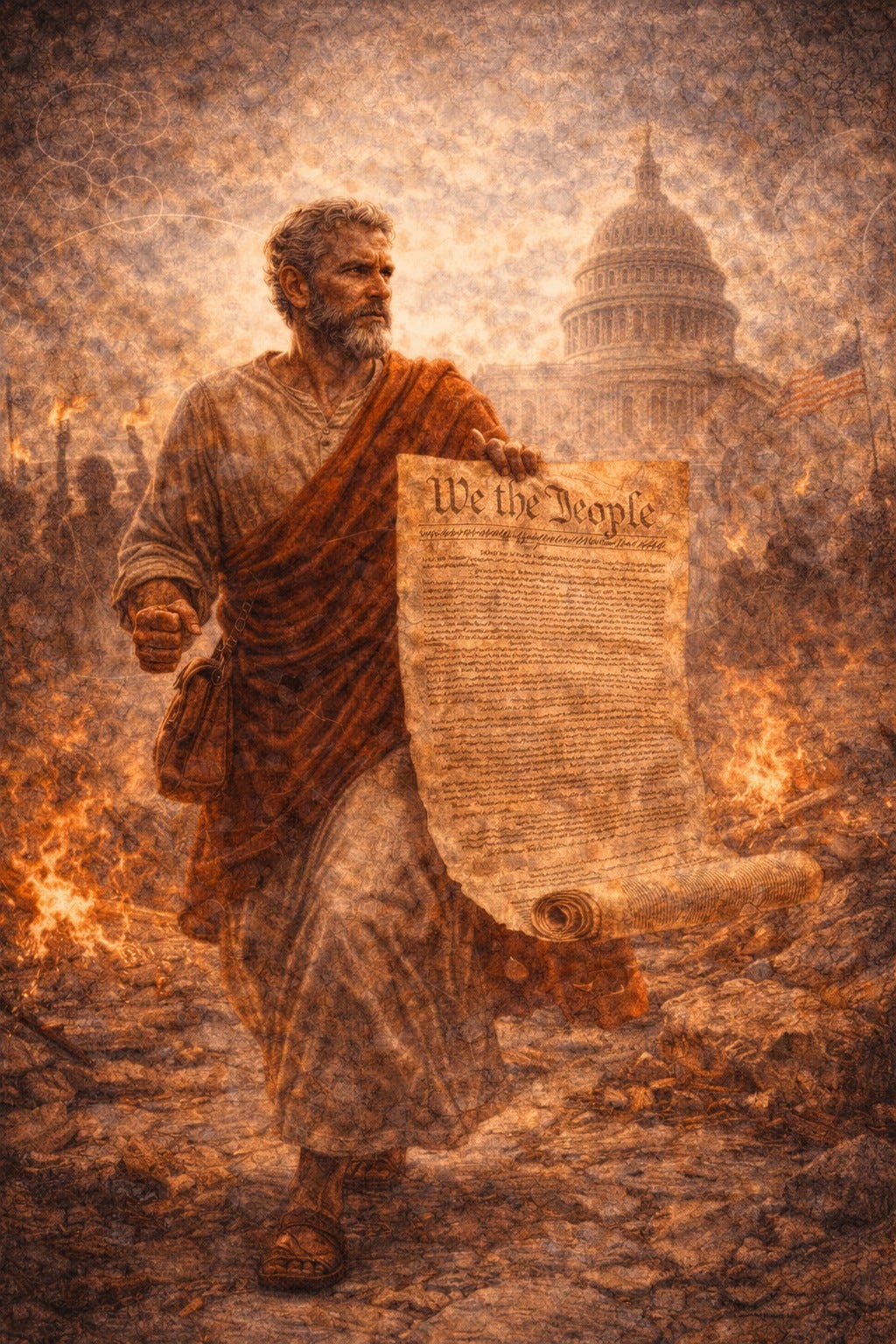
“Whatever might happen, it’s within my power to derive some benefit from it.” — Epictetus, Discourses, 2.5
“The impediment to action advances action. What stands in the way becomes the way.” — Marcus Aurelius, Meditations, 5.20
In every generation, the preservation of liberty demands more than admiration for the past; it requires action in the present. America was born not in comfort, but in resistance—against tyranny, against injustice, and against despair. Today, as the fabric of our civic culture frays, many Americans face a growing question: How do I remain virtuous, composed, and effective in a time of adversity and division?
The answer lies in the ancient philosophy of Stoicism. Epictetus and Marcus Aurelius, two of its greatest voices, offer us not passive resignation but practical wisdom—a way to transform adversity into growth and resistance into resilience. Their insights illuminate a path for those who seek not just to survive difficult times, but to thrive within them, and to do so while upholding the enduring values enshrined in the U.S. Constitution.
Adversity as a Moral Opportunity
Epictetus, once a slave, knew firsthand the brutality of circumstance. Yet he wrote, “Whatever might happen, it’s within my power to derive some benefit from it.” This is not naive optimism. It is a radical assertion of human freedom—not the political kind, but the internal, moral autonomy that no external force can take away.
In the context of modern American life, where constitutional rights are often weaponized or misunderstood, where political discourse is poisoned by tribalism, and where good people are tempted to retreat into silence, Epictetus calls us to stand up and claim our inner power. We may not control the outcome of an election, the opinions of our neighbors, or the narratives in the media. But we can choose how we respond. Every challenge becomes a chance to practice courage, self-control, and justice.
When a policy fails us or a politician betrays our trust, we are given a test: will we respond with reactionary hatred—or with reasoned, virtuous resistance?
Obstacles as Pathways to Action
Marcus Aurelius deepens this insight with his now-famous line: “The impediment to action advances action. What stands in the way becomes the way.” In other words, the very obstacle we face becomes the raw material for progress—if we have the courage to engage with it.
This perspective is especially vital for Americans who revere the Constitution not merely as a legal document, but as a moral compass—a framework of ordered liberty. Defending it in our time does not mean longing for the past or fighting merely to “own” the opposition. It means becoming the kind of citizens who can preserve the Republic by embodying the virtues it depends on: courage, wisdom, justice, and temperance.
The loss of civic trust? An opportunity to build new institutions and communities of character.
The rise of extremism? A summons to speak the hard truth calmly and clearly.
The erosion of rights? A moment to stand not with fury, but with unwavering moral force.
In each case, the obstacle becomes our teacher. The hardship is not in the way—it is the way.
Stoic Virtue and Constitutional Duty
Both Stoicism and the American constitutional tradition place the weight of responsibility on the individual. This is no accident. The Framers understood—as did the Stoics—that liberty cannot survive without virtue. A free republic depends not merely on laws, but on citizens capable of governing themselves.
To live as a Stoic and as a constitutional patriot is to understand that adversity is not a detour but a proving ground. It is where our convictions are forged, tested, and ultimately revealed. Stoicism calls us to focus not on whether our cause is convenient or popular, but whether it is just. The Constitution guarantees rights, but it does not guarantee ease. To uphold it, we must often endure hardship with grace, and sacrifice comfort for principle.
This is especially true today, when the enemies of constitutional order are not always foreign tyrants but domestic demagogues, and when the battle for truth is waged not only in courts but in schools, town halls, and online conversations. The virtue we bring to these encounters is what sustains the Republic—not our anger, but our integrity.
A Call to Personal Responsibility
In practical terms, what does this mean for the individual? It means:
Speaking truthfully and rationally, even when it is unpopular.
Refusing to become cynical or apathetic, even when institutions falter.
Volunteering, voting, mentoring, and building up the civic commons.
Resisting both nihilism and fanaticism.
Living with the calm strength of one who knows that his or her virtue is untouchable, even in defeat.
We do not always win. But we always bear witness. That is the Stoic way—and the American way, when rightly understood.
The Adversity We Deserve
We are not promised comfort. But we are promised the freedom to choose our response. As Epictetus teaches, everything that happens can be used for our good—if we will it. And as Marcus reminds us, the very thing that seems to stop us may, in fact, be our path forward.
Adversity is not the enemy. It is the test. And each citizen who meets it with virtue strengthens not only their own soul but the soul of the Republic.
The way forward is not around the obstacle. It is through it. And if we walk it with reason and resolve, we may not only endure, but prevail.